
 As Long Island continues to grow and evolve, the demand for skilled labor in construction and the trades is stronger than ever. Behind the scenes of every bridge, highway, and sewer infrastructure project are the hands of trained professionals—many of whom got their start through union-led apprenticeship programs. These programs offer more than just technical training; they’re pathways to middle-class lifestyles via careers in essential industries.
To better understand how these programs operate, who they serve, and the impact they’re having on the local workforce, Long Island Road Warriors spoke with leaders from Long Island’s labor trade unions, including Laborers Local 1298, Carpenters Local 290, Laborers Local 66, and Teamsters Local 282. From recruitment to hands-on training, equity initiatives to economic outcomes, this interview takes a deep dive into what it really means to build a career—and a future—through union apprenticeship.
Question 1: Can you give an overview of your apprentice training program?
LOCAL 1298:
Our program has been in existence since 1997. Since that time, we have accepted and graduated nearly 350 apprentices, many of whom have gone on to very successful careers. When they graduate from our program they are certified and trained in almost every aspect of the work we perform, making them very valuable to our contractors.
LOCAL 66:
The Local 66 apprenticeship program has been in place for 26 years and is part of the broader LIUNA apprenticeship program. We train new members from our Long Island communities in an age range from High School graduate to 40 years old for careers primarily in Nassau and Suffolk counties.
LOCAL 290:
The North Atlantic States Carpenters Training Fund provides an opportunity for students to earn as they learn over the course of a 4-year apprenticeship. By combining hands-on learning in a controlled training environment with real-life experience working for signatory contractors, our students are able to hone their professional and craft skills to remain competitive in today’s construction industry.
LOCAL 282:
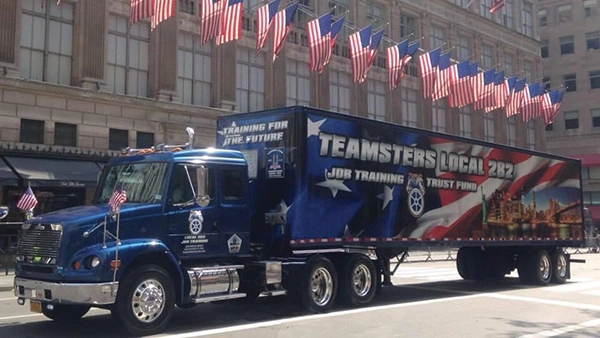
The Local 282 Job Training Trust Fund provides members under the Collective Bargaining Agreement with the training they need to perform their jobs safely. With the Union and its signatory companies working together, we provide our members with new skills or keep their certifications updated to keep them safe on the job.
Question 2: How long is the typical apprenticeship and what does the curriculum include?
LOCAL 1298:
Our program requirements are 300 hours of classroom time and/or hands on instruction and 4000 hours of working in covered employment. It usually takes 2½-3 years to complete our program.
LOCAL 66:
Our apprenticeship is a 4 year or 4,000 hour program, whichever happens first. Many finish up class requirements in a 2-3 year timeline. The core jurisdictions of Local 66 are concrete, mason tending and demolition. Our curriculum emphasizes these skills.
LOCAL 290:
A typical apprenticeship is 4-years in duration and includes training in all aspects of the trade—from commercial to residential carpentry, welding, mass timber, solar installation and Infection Control Risk Analysis (ICRA). Safety is of the utmost importance, so our students graduate knowing how to safely operate various pieces of equipment, don/doff a climbing harness, work at heights, and inspect/install scaffolding systems—to highlight just a few.
LOCAL 282:
The Local 282 Job Training Trust Fund provides many types of training which includes CDL training, Forklift Training, NCCCO Knuckle Boom Classes, NSC Defensive Driving Class, OSHA 30 Hour and 10 Hour Construction classes, 40 Hour HAZWOPER Class and 8 Hour HAZWOPER Refresher Class.
Question 3: How do you ensure apprentices are receiving both high-quality technical training and hands-on experience?
LOCAL 1298:
We hold class 2 times a week for our apprentices. We also send our instructional staff to train the trainer classes through our LIUNA program this allows us to keep up on the latest methods. In addition to this we are in constant contact with the contractors who employ our apprentices and make sure they are being assigned to a varying number of tasks.
LOCAL 66:
LIUNA Training’s Instructor qualifications are extremely high and possibly the highest in the industry as most of the instructors nationwide have to pass a third party ANSI test for certification. All of our instructors are veterans of the industry with wide ranging skills and experience.
LOCAL 290:
The beauty of our hybrid program is that it allows students to enter our state-of-the-art training centers for structured learning, while also earning a wage and benefits working in the field for our signatory contractors. Students are scheduled to attend training roughly 4 times/year; when they are not engaged in classes, they are putting that knowledge to work in the field while earning a paycheck and getting to see firsthand what the rigors of this profession entail.
LOCAL 282:
After completing a training program that a member has participated in, they are required to take a knowledge-based test and a practical test. This is required in order to receive the different types of licensing they are trying to receive.
Question 4: What kind of support systems such as mentorship, tutoring, and career counseling are available to apprentices?
LOCAL 1298:
We are available to answer any questions they may have. We will reach out to contractors and speak about their progress, then discuss it with the apprentices identifying areas where they need to improve or where they are doing well. We have also begun construction on a new reference room at our training facility which will be available to all to study and keep up on the latest advancements in technology.
LOCAL 66:
We understand the challenges of completing our program so while we train for the toughness required in this field we also encourage the extended family vibe we have here at 66. This welcoming approach encourages new members to ask questions and continue training.
LOCAL 290:
NASCTF has an established culture of learning and culture of respect at all of our training centers. Our entire staff, from admin to instructor to coordinator, is tasked with ensuring that all members (Apprentice and Journey-Level) have access to learning opportunities as well as support resources. Our staff is trained in de-escalation and mental health first aid response. We have a robust Employee Assistance Program open to all members; resources include but are not limited to legal assistance, mental health and wellbeing connections, access to mental health clinicians, financial planning, and childcare resources.
LOCAL 282:
We are able to provide the workforce with skilled licensed people that are able to perform their job safely and efficiently.

Question 5: How do graduates contribute to the local workforce and economy?
LOCAL 1298:
Our graduates contribute to the local workforce by being skilled workers that earn enough money to provide well for their families through excellent benefits and wages. Many become homeowners and can take root in communities raising families, thus strengthening our local economy.
LOCAL 66:
All of our apprentices are residents and tax paying citizens of our Long Island communities. Part of our training is the responsibility to represent and promote our union culture in every aspect of life. We are active in politics and community affairs and promote the time tested values of middle class pathways our organization has promoted for 123 years.
LOCAL 290:
By training a local workforce, we are able to build the cities and towns in which we live. Our signatory contractors pay taxes back into the local economy, which allows for growth and additional opportunities for our members, as well as our communities to thrive. Not only that, but our graduates feel a sense of pride building in their communities and are able to pass on the legacy of: “We built that.”
Question 6: How has the demand for skilled labor on Long Island changed in recent years?
LOCAL 1298:
While the demand for more skilled labor on Long Island is true, it is not unique to our region. Advancements in methods and technology require more advanced skills nationwide. Our LIUNA training program allows us to constantly be on the forefront of training our members for new skills, thus ensuring we retain our share in the marketplace.
LOCAL 66:
All of our apprentices are residents and tax paying citizens of our Long Island communities. Part of our training is the responsibility to represent and promote our union culture in every aspect of life. We are active in politics and community affairs and promote the time tested values of middle class pathways our organization has promoted for 123 years.
LOCAL 290:
The demand for skilled labor across Long Island has increased dramatically over the last ten years. With the bulk of the demand in upgrades and modernization of healthcare facilities. This need has thankfully been noticed by schools across the island who have started to offer CTE programs to provide opportunities to their students and help further meet that demand.
LOCAL 282:
With ever climbing insurance premiums and more safety demands, its important to meet the challenges with trained and skilled labor.
Question 7: What role do unions play in preparing the next generation of tradespeople?
LOCAL 1298:
For nearly 100 years union membership on Long Island has allowed many people to successfully raise families and lead very productive lives. It is our responsibility to let new tradespeople see how well you can benefit from being part of a union. Therefore, being able to continue this great tradition of the union movement.
LOCAL 66:
The role our unions play in the future development of tradespeople is essential in that no other organization anywhere has the history of building and developing our communities and the benefit of what does and doesn’t work with workforce development. We have the resources, the experience and the projects needed to set new workers up to succeed.
LOCAL 290:
Unions play a crucial role in preparing the next generation of tradespeople by providing true access to good wages, benefits, quality of life, and dignity in retirement. Not only is the union focused on craft skills and preparing students to work, but we are also equally committed to professional development and providing our contractors with true professional construction leaders. Union workers are unmatched in their commitment to quality and safety, which is what separates us from the non-union sector.
LOCAL 282:
Unions are able to provide highly skilled workers to meet the demand of the industry especially the new members coming in. They are able to receive training and get the required certifications that are required to perform their job.
Question 8: Are there any new initiatives, partnerships or expansions planned for your program?
LOCAL 1298:
We currently have nothing new planned. However, we are always on the lookout for new opportunities that will help us grow and reach more young people that are considering an apprenticeship in our local. We also work with various state run agencies and groups to introduce our program to many different young people from varying backgrounds. We attend as many job fairs as we can seeking out potential members and presenting our program to them.
LOCAL 66:
We are constantly updating and adjusting our curriculum to new methods of building but far and away the most exciting and innovative initiative we’ve been utilizing is our high school pre-apprenticeship which provides direct access for grade 9-12 participants.
LOCAL 290:
We are always trying to stay ahead of anticipated project and building needs, by incorporating new technologies or systems into our training. We have strong relationships with community groups, BOCES, contractors, and manufacturers to ensure that our Apprentices are receiving the most relevant and up-to-date training possible. NASCTF is planning to make significant facility improvements to our existing training center in Hauppauge, NY.
LOCAL 282:
We are looking into providing a more enhanced CDL program by adding different types of trucks to give our members a variety of vehicles to learn how to operate.
Question 9: How are you incorporating evolving technologies or sustainable practices into training?
LOCAL 1298:
We currently have courses offered through LIUNA for Wind and Solar work. Several of our members are working on wind farms at this time and still more on solar farms. As far as sustainable practices we have incorporated many battery powered tools into our program.
LOCAL 66:
As stated above we are continuously updating our training curriculum to better prepare our trainees with modern methods and materials. From different protocols of safety to communication and preparation, we are an ever evolving organization.
LOCAL 290:
NASCTF is constantly reviewing our curriculum to ensure that we are teaching our student the systems and processes being used out in the field. Recent sustainability developments in the industry include mass timber and solar work—both of which have been incorporated into our training so that students are employable and ready to meet labor/project demands. This keeps our apprentices a step ahead, marketable, and ready to work.
LOCAL 282:
The biggest changes we have made with technology include computers and projectors for classroom as well as vehicles have changed dramatically over the years with all the computer aids to help a driver be more aware of everything around them.
Question 10: What advice would you give to someone considering a union apprenticeship but unsure if it’s the right path?
LOCAL 1298:
As a 3rd generation union construction worker, I would tell them it is a great way to make a living. You will enjoy many great benefits for you and your family and have a very secure retirement. You will meet many wonderful people in this field and will one day be able to look back and be proud of the many projects you have been part of throughout your career.
LOCAL 66:
My primary points of advice for someone considering a union apprenticeship are: 1) Our career paths are some of the best options for a solid middle class career with dignity at retirement. 2) Our union careers are community building opportunities that provide our residents with great service. 3) Our union movement is a social movement and if approached properly can be a major platform to voice perspectives and make a difference.
LOCAL 290:
We would remind people that a union apprenticeship can lead to many, many opportunities within the construction industry—it’s not limited to just working in the field! By participating in apprenticeship, our members receive the best craft and professional training, and they also have access to college level classes through articulation agreements with local colleges and universities. Career pathways include becoming Stewards on jobsites, Foremen, Company Superintendents, Estimators, Business Agents/Organizers, Training Instructors/Coordinators, to name a few!
LOCAL 282:
The best advice to be given is make sure you choose a path in something you like to do. There are many trades out there, find the one that suits you and put your heart into the program of your choice.