

As a general contractor that has worked on Long Island’s roadways for more than 65 years, we have witnessed firsthand the changes, challenges, and evolving standards that have shaped the industry into what it is today. Throughout that time, one principle has remained constant: safety comes first. Whether it involves protecting workers within a work zone, ensuring proper installation, or providing a safe roadway for the millions of motorists who travel Long Island every day, safety is at the forefront of every project and every decision.
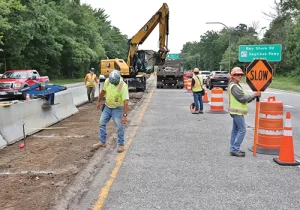 One of our latest projects, Guide Rail Rehabilitation along the Robert Moses Causeway, is a strong example of how those standards continue to evolve. Originally awarded in August 2022, the project called for the installation of more than 8,000 linear feet of steel-backed timber guide rail along the roadway shoulders and an additional 18,000 linear feet within the median.
In April 2023, however, the project was brought to a halt when the Federal Highway Administration determined that the guide rail configuration required additional safety measures and proposed the incorporation of a rub rail along the lower portion of the system. The change was driven by the continued evolution of roadside safety standards, extensive crash testing, and the changing characteristics of the vehicles traveling our roadway vehicles that are larger, heavier, and faster than those for which many older roadside safety systems were originally designed.
Although this is more of a one-off major design change, projects undergo revisions frequently, and on the contracting side, we do our best to take a hands-on approach and adapt accordingly. We stay up to date on all current specifications, standards, and engineering bulletins across all areas of our work, whether that be guide rail, signs, fencing, or other roadway work, so that we can be as prepared as possible when issues arise. By staying infonned and anticipating potential changes, we can coordinate our crews and equipment when necessary, shift resources, and keep production moving on all fronts. This approach allows us to minimize disruptions and keep projects operating as smoothly and efficiently as possible.
Oftentimes, our work comes toward the end of major roadway projects, with much of the construction already completed by the time our crew arrives on site. The work we perform is heavily influenced by elevations, slopes, utilities, drainage, and other elements of the roadway, making coordination between contractors who come before us essential to the job. We also must have open communication with the agencies we work for, adhering to schedules and deadlines that may be, as well as keeping the expected quality of work maintained.
With three generations of family working in the business, we’ve developed a strong understanding of what it takes to get this work done. Each generation brings its own ideas, perspective, and experience to the table, while carrying forward the knowledge that has been passed down. We take a lot of pride in being a part of developing and maintaining Long Island’s roadways and infrastructure, knowing that our work becomes part of people’s everyday lives, whether they’re commuting to work, running an errand, or simply traveling from one place to another. We look forward to continuing in this industry, building on what we’ve learned, and passing that experience on to the next generation.