

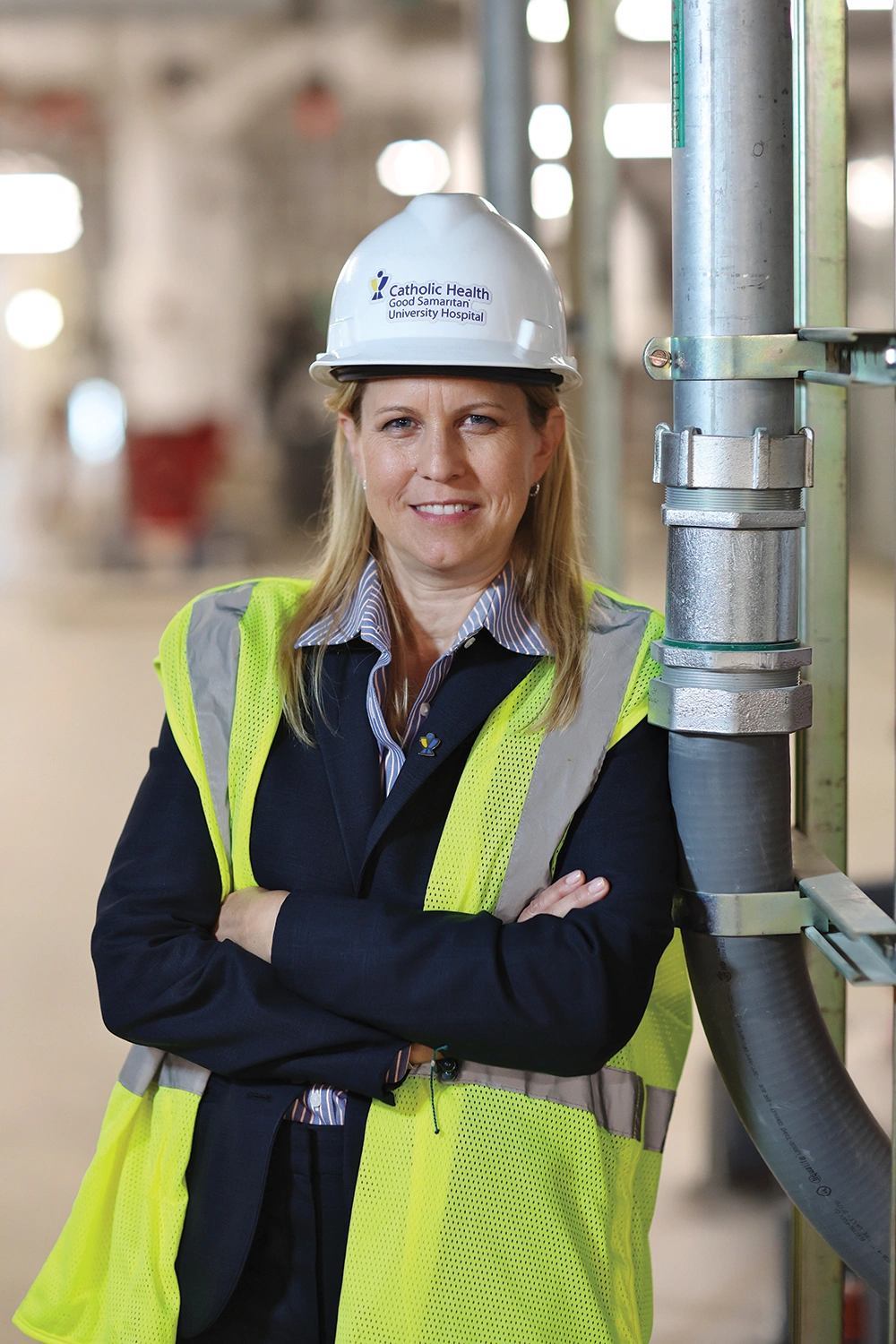
 When Christine Flaherty accepted a position at Catholic Health, it was like coming home: to her own community, her field and her faith. As Senior Vice President of Real Estate Development and Facilities for Catholic Health, Flaherty brings to Long Island more than two decades of high-stakes experience, from hurricane recovery to pandemic response, from billion-dollar capital programs to mission-driven healthcare transformation. Her journey has never followed a straight line, but as she’ll tell you, that’s exactly the point.
STEM Roots and a Circuitous Route to Healthcare
Raised in a family steeped in science and service, Flaherty credits her early love of STEM to her parents: her father, an engineer; her mother, a nurse who once dreamed of becoming a doctor. Christine’s path veered toward engineering when a medical diagnosis of epilepsy made the sleep-deprived life of a doctor unrealistic. But problem-solving? That was in her DNA.
“I always loved math and science. And I loved action,” she says. “I didn’t want to sit behind a desk. I wanted to see things built.”
Her early years took her from owner’s rep firms to contractors and construction managers, chasing field experience and learning fast. Along the way, mentors guided her steps and encouraged her to pursue an MBA, a rare move for an engineer but one that’s clearly paid off.
“Engineering teaches you how to problem solve, but business teaches you how to think strategically,” Flaherty says. “The combination helped me tremendously.”
Public Sector Leadership and a Crash Course in Crisis
After rising to VP at a private firm, Flaherty made an unexpected pivot into public service, joining New York City’s Department of Design and Construction (DDC). That move would set the stage for some of the most defining chapters of her career. Most notably, the rebuilding effort after Superstorm Sandy.
“I was living in Freeport at the time, and I remember feeling helpless, thinking, ‘I wish I could help,’” she recalls. “Then I ended up leading the Build It Back program for the city. Suddenly I was helping thousands.”
She’d later bring that expertise to NYC Health + Hospitals just months before COVID-19 hit, overseeing emergency construction of surge hospitals and critical care facilities.
“I was literally on the job when COVID began, coordinating $400 million in construction,” she says. “We were building ICU beds in active hospitals at a breakneck pace.”
That experience, as her second major disaster response, solidified her as a leader who can perform under pressure and mobilize complex teams with agility and empathy.
Coming Home to Long Island and Catholic Health
After decades of working in the city, Flaherty finally found a role that brought her back home and aligned with her personal values.
“At Catholic Health, I can serve the community where I live and openly practice my faith,” she says. “That was something new and deeply meaningful.”
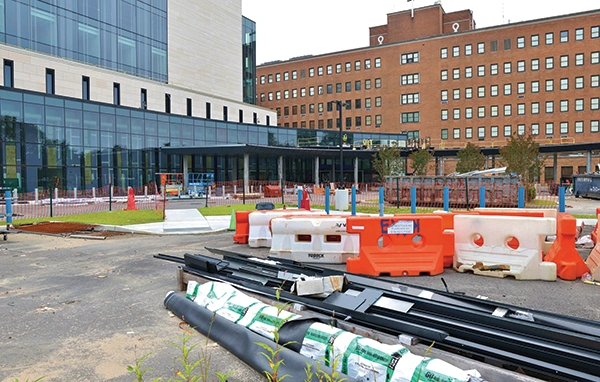
Her portfolio at Catholic Health is massive and mission-critical: from system-wide master planning to modernization of six hospitals, ambulatory care expansion, and major capital projects like the Patient Care Pavilion at Good Samaritan University Hospital.
She also oversaw the installation of a flood wall and pump station system at the West Islip campus—a FEMA-funded resiliency project constructed by Posillico to safeguard against future storm impacts.
“Resiliency in healthcare is non-negotiable,” she says. “When a patient comes in, they need to know we’re ready, no matter what storm hits.”
On Contractors, Collaboration, and the Road Ahead
Flaherty knows that none of these projects happen without strong partnerships and she’s quick to praise Long Island’s contracting community.
“We need partners, not just vendors,” she says. “Contractors like Posillico have been phenomenal in dealing with inflation, supply chain issues, and still getting it done.”
But she also issues a challenge: “Healthcare is not for the faint of heart. If you don’t have experience in it, find your way in through smaller projects. But know this: safety, cleanliness, and reliability are everything in a hospital.”
She also urges contractors to embrace the future: “Automation, robotics, drones. They’re not replacing the trades, they’re transforming them. The next generation is ready to lead, but we have to mentor them.”
Flaherty herself is deeply committed to that cause. She volunteers with the ACE Mentor Program of Nassau County, helping high school students explore careers in architecture, construction, and engineering. “I’m a product of great mentors,” she says. “Now I pay that forward.”
Navigating Complexities, Building for the Future
Flaherty’s daily responsibilities span everything from real estate transactions to board-level capital governance. She works with Catholic Health’s first Real Estate and Facilities Committee, a systemwide structure to align planning, budgeting, and execution across all campuses.
Among the biggest challenges? Setting realistic expectations.
“This work takes time. A strategic vision for Catholic Health might span 10–20 years,” she says. “Sometimes the hardest part is helping stakeholders understand why due diligence is so critical before a shovel hits the ground.”
From navigating municipal red tape across Long Island’s patchwork of jurisdictions to aligning with state and federal energy policy goals, Flaherty is constantly balancing urgency with long-term vision.
And she’s not slowing down.
“We have a responsibility to modernize our facilities, grow our ambulatory network, and deliver care where it’s needed most,” she says. “But we have to do it smartly with the right partners, the right priorities, and the right protections in place.”
What Keeps Her Up and What Keeps Her Going
Ask her what wakes her up at night, and she’ll say: “That one last thing I forgot to do.”
But ask her what brings the greatest joy, and her answer is immediate: mentorship.
“Whether it’s my son, a team member, or a high school student, I love helping people grow,” she says. “It’s what fuels me.”
And if her career is any indication, it’s also what drives the buildings she helps create: spaces designed not just to stand, but to serve.