Home Blog

FOREWomen LI

0

Earth Day Energy Summit Sparks Critical Conversation on Long Island’s Energy Future

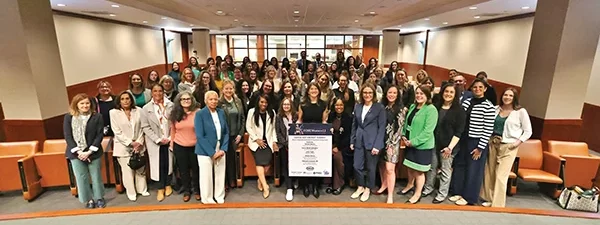
At a time when conversations surrounding energy policy, grid reliability, sustainability, and infrastructure investment are becoming increasingly urgent, FOREWomen LI brought together some of the most influential leaders shaping New York’s energy future for a candid and forward-looking discussion.

The summit highlighted the reality that energy conversations are no longer abstract policy debates. They are deeply personal to the communities, businesses, and workers who rely on resilient systems every single day.

A Grounded Conversation on Energy and Infrastructure

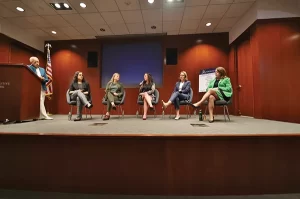
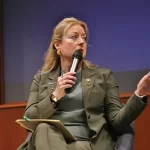
Moderated by LIPA Board Chair Tracey Edwards, the discussion delivered exactly what the moment demanded: honesty, insight, and practical perspective.

In true Tracey fashion, the conversation remained grounded, direct, and focused on the real-world challenges facing New York’s evolving energy landscape.

Women Leading New York’s Energy Future

The panel featured an extraordinary group of women leading some of the state’s most significant energy and environmental initiatives, including:

Together, the panelists explored topics central to the future of Long Island’s energy system, including:

  • Grid diversification
  • Offshore wind
  • Battery storage
  • Clean energy investment
  • Public trust
  • Workforce development
  • Reliability and affordability
  • The balance between sustainability goals and real-world infrastructure needs

Collaboration Across the Industry

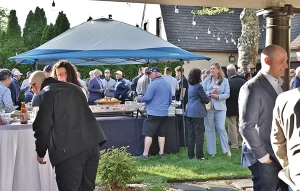
What made the summit especially impactful was not just the expertise on stage, but the collaboration throughout the room.

Industry professionals, contractors, engineers, labor leaders, public officials, consultants, and advocates came together to engage in thoughtful conversation about how Long Island can move forward responsibly and strategically during a pivotal moment for the energy sector.

FOREWomen LI’s Growing Role

The Energy Summit served as another example of FOREWomen LI’s growing role as a convening force within the region’s infrastructure industry.

By creating meaningful spaces for dialogue, the organization continues to elevate women’s leadership across sectors that are actively shaping Long Island’s future.

The Answer, My Friend, is Blowing in the Wind

By Chris Sorensen, New York City
District Council of Carpenters

New York has a power problem, and it’s only getting bigger.

The state’s own grid operator, NYISO, has already warned that the downstate region faces growing risk of power shortages.

That warning isn’t abstract — it’s structural. Data centers are multiplying across the region, drawing enormous amounts of electricity to power the artificial intelligence boom. Electrification of buildings and transportation is accelerating, putting new and sustained demand on a grid that wasn’t designed to absorb it. And as older fossil fuel plants retire, the cushion we’ve historically relied on is shrinking.

Offshore wind isn’t just a climate policy. It’s a capacity solution.

And right now, it’s stalled.

That’s a problem for every New Yorker — and our members feel it personally, because they should be out there building right now.

South Fork Wind Proved the Model

We already know it works. South Fork Wind has been spinning for over a year, delivering power to Long Island when it matters most.

On the hottest days of summer, when the grid is stressed and energy is scarce, South Fork kept running. In its first full year of operation, it achieved a 46.3 percent capacity factor, generating electricity on 99 percent of all days in 2025.

It delivered. It proved that offshore wind isn’t theoretical — it is a reliable, scalable generation source that this region depends on.

And it proved that developers like Ørsted and Equinor, who have been genuine partners in how these projects get built, can work hand-in-hand with our labor to get the job done right.

Contractors like Haugland Group have been equally critical — not only as strong labor partners on the work itself, but as advocates who understand that a healthy offshore wind industry and a union workforce aren’t in tension.

They go together.

Transmission Means Jobs and Long-Term Reliability

Beyond the generation, the transmission infrastructure that comes with offshore wind will create thousands of additional jobs and strengthen a grid that has long needed the investment.

Every part of that work matters:

  • Every cable run
  • Every substation upgrade
  • Every interconnection point

It is work — skilled work, union work — that improves reliability for decades.

The Current Pause Cannot Become the Future

So let’s be direct about the current moment: this pause is not what we wanted.

Our members want to be working. Every day an offshore wind project sits idle is a day New York’s capacity gap gets a little wider and a little harder to close.

We are not happy about that.

But we are not going to stand still either.

An Opportunity to Organize

This is an opportunity — not to celebrate, but to organize. To sit down with developers and demonstrate, with the track record we’ve already built, that the skilled carpenters of New York have the manpower, the training, and the expertise to take on more of this work.

South Fork is the proof of concept. Our members were there. They performed.

And the next generation of projects should reflect that — with a stronger commitment to union labor throughout the supply chain, including:

  • The first foundation
  • The transmission and grid infrastructure
  • The substation and interconnection work
  • The final cable pull

Ørsted and Equinor have shown that partnership is possible. Haugland Group has shown that local contractors can lead.

Now it’s time to lock that model in — to make it the standard, not the exception.

Let’s Get Back to Work

New York needs offshore wind to keep the lights on, manage rising demand, and build a grid fit for the next century.

We have the workers to build it.

Let’s get back to work.

Political Perspectives: Fighting for Long Island: Safer Communities, Stronger Economy, Real Tax Relief

Fighting for Long Island: Safer Communities, Stronger Economy, Real Tax Relief

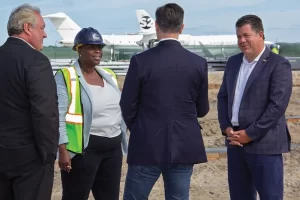
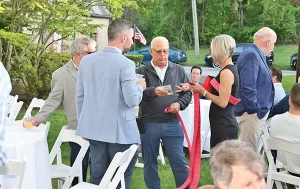
Congressman Nick LaLota (far right) discusses a newbuilding with project stakeholders at Francis S. Gabreski Airport in Westhampton Beach on August 19, 2025.
Congressman Nick LaLota (far right) discusses a new
building with project stakeholders at Francis S. Gabreski
Airport in Westhampton Beach on August 19, 2025.

When I began my second term in Congress, I made a promise to Long Island: to fight every day to make life here safer, stronger, and more affordable. While this term isn’t over, we’ve already delivered results I’m proud to share.

Long Island’s builders, engineers, contractors, and small business owners are the backbone of our communities. They build our homes, maintain our infrastructure, and power our local economy. That’s why I supported the Working Families Tax Cuts Act, which delivers real relief to families and the businesses they rely on. The law makes the 20% pass-through deduction permanent, allowing job creators to plan with confidence. It enables immediate write-offs for equipment purchases, allowing businesses to invest more in their businesses, and strengthens loan interest deductions to support continued growth.

This legislation also allowed us to fix a key flaw in the 2017 Tax Cuts and Jobs Act. While that law provided meaningful benefits, its $10,000 cap on State and Local Tax, or SALT deductions, hit Long Islanders especially hard. By working with a bipartisan coalition and pushing back against opposition from both sides, we successfully quadrupled the SALT cap to $40,000.

The impact is tangible. Combined with other provisions in the Working Families Tax Cuts Act, Long Island families are keeping an average of $2,860 more this tax season. That’s money for a car repair, a heating bill, or simply breathing room in a tight budget — real relief for families facing real pressures.

As a member of the House Appropriations Committee, I’ve used my seat at Congress’s “kitchen table” to deliver targeted investments in Long Island’s infrastructure. In fiscal year 2026 alone, I secured $27.1 million for clean water, public safety, and critical infrastructure projects across Suffolk County, along with hundreds of millions more for conservation programs and scientific research. This builds on more than $14.1 million secured during my first term for sewer systems, stormwater improvements, and shoreline protection.

We’ve made meaningful progress, but there’s more work ahead. I remain committed to ensuring more of New York’s federal tax dollars are returned to our region for the projects we need.

I’m also working to strengthen the voice of working people within my own party. The last presidential election made clear that old partisan divides no longer reflect the priorities of many Americans. Too often, working men and women have felt overlooked. As Vice Chair of the Republican Main Street Labor Caucus, I’m focused on delivering results — fair wages, safe working conditions, retirement security, and the right to collectively bargain.

At the same time, we’re cutting through unnecessary red tape that has slowed growth in our region. By working across the aisle where it counts, we can build on practical solutions that strengthen our construction and trades industries.

As Long Island’s advocate in Congress, I will keep fighting for our families, workers, and businesses. The road to a stronger, more prosperous future runs through Washington — and I intend to make sure Long Island wins every mile of it.

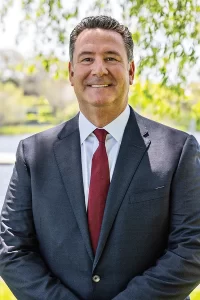
Congressman Nick LaLota is a Naval Academy graduate, 11-year Navy Veteran, and attorney serving his second term representing New York’s First Congressional District.

Restoring Long Island, One Native Plant at a Time

Restoring Long Island’s Natural Heritage

Long Island stands at a crossroads. For decades, we have watched our native landscapes shrink, our waterways degrade, and our biodiversity decline — often quietly, almost imperceptibly, until the cumulative loss became impossible to ignore.

Yet across the region, a new model of conservation is taking root: community-powered, science-driven, and grounded in the belief that restoring nature is not only possible, but essential to Long Island’s future.

Few organizations embody this shift more clearly than the Long Island Conservancy (LIC), a nonprofit founded in 2021 with a simple but urgent mission:

  • Plant native.
  • Remove the invasive.
  • Conserve our lands.

A Grassroots Conservation Movement

What began as a grassroots volunteer effort has rapidly grown into a recognized 501(c)(3) leading restoration projects, native planting programs, and long-term sustainability initiatives across the region.

LIC’s work is built on a principle that conservation succeeds when communities are empowered — not sidelined. LIC’s model blends hands-on stewardship with education, municipal collaboration, and support for Long Islanders seeking to restore their own landscapes.

This approach is not just admirable; it is necessary. Long Island’s ecological challenges are profound. Invasive species dominate many suburban yards and open spaces, often without residents realizing how dramatically these plants displace native wildlife.

As one recent Long Island-based commentary noted, most suburban landscapes contain only about 25% native vegetation, far below the roughly 70% native threshold needed to sustain local ecosystems. The result is a slow unraveling of the food webs that once supported birds, pollinators, and other wildlife.

Restoring Habitat, One Parcel at a Time

LIC tackles this crisis head-on. Through volunteer-driven invasive removal and native planting, the organization restores habitat parcel by parcel, neighborhood by neighborhood.

Their projects support practical, measurable conservation goals, including:

  • Improving water quality
  • Mitigating flooding
  • Reducing stormwater runoff
  • Rebuilding ecological corridors
  • Restoring native biodiversity
  • Strengthening community resilience in the face of climate change

These are not abstract environmental goals. They are practical interventions that help strengthen the natural systems Long Island communities depend on.

Changing How Long Islanders See Their Landscapes

But the Conservancy’s impact extends beyond the physical landscape. LIC is cultivating a cultural shift: helping Long Islanders understand what grows around them, why it matters, and how individual choices shape the region’s ecological future.

Those choices include:

  • What we plant
  • What we remove
  • What we protect
  • How we manage yards, parks, wetlands, and open spaces

The organization’s growth also reflects a broader movement in conservation: a turn toward local leadership and trust-based stewardship. LIC is already operating in this future — building partnerships, mobilizing volunteers, and anchoring restoration efforts in the communities that depend on them.

A Responsibility With Immediate Rewards

Long Island’s environmental challenges will not be solved by any single organization. But LIC demonstrates what is possible when residents refuse to accept ecological decline as inevitable.

Their work shows that restoration is not a luxury — it is a responsibility, and one that yields immediate rewards.

  • Plant a native milkweed, and watch monarchs return.
  • Remove a patch of invasive knotweed, and see native shrubs reclaim the space.
  • Restore a wetland, and watch water quality improve.

For Long Islanders looking to better understand invasive species and regional restoration efforts, organizations such as the Long Island Invasive Species Management Area and native-plant resources from the National Wildlife Federation provide useful guidance on the role local landscapes can play in supporting biodiversity.

The question now is not whether Long Island can restore its natural heritage. It is whether we will choose to.

The Long Island Conservancy has already chosen — and they are inviting the rest of us to join them.

Is Your Portfolio Disaster-Proofed?

Dynamic Risk Management Takes Center Stage
By Rocco A. Carriero, MBA, CRPC®, APMA®

While no one can have a Teflon-coated portfolio, it’s important that your financial plan is positioned to manage geopolitical risks. In a recent survey*, over 40% of financial advisors listed geopolitical risks as a top investor concern.

Armed conflict, military action, terrorist acts, and global trade disruptions occurring over the next 12 months are considered increasingly likely. Not all the risks occur beyond our borders. Internal risks include:

  • Domestic terrorism
  • Currency instability
  • Tariffs and sanctions
  • Strikes, protests, boycotts, and riots
  • Natural disasters such as earthquakes, floods, wildfires, and droughts
  • Technology disruption, including hacking and identity theft

Technology disruption is a fast-growing risk, exacerbated by increasing artificial-intelligence capabilities that can originate from virtually anywhere. Identifying the most pertinent risks and how to protect oneself from them has become a key, long-term planning component as geopolitical risks are real.

Today, fundamental planning includes risk management, downside resilience, and outcome-oriented investment strategies.

How Prepared Is Your Portfolio?

Crises often strike when we least expect them. What kind of effect can one have on your personal finances? How might they impact you, your family, your business, and retirement?

While it’s impossible to predict when and where the next disaster may strike, it’s important to position your portfolio so it is prepared to financially withstand an emergency. As there is opportunity in every crisis, the question is: how well prepared are you?

A good place to start is with an honest examination of your present portfolio:

  1. Does your portfolio include a mix of equities, bonds, cash, and insurance products to provide capital growth and income while minimizing volatility?
  2. Does your portfolio have suitable liquidity, or will it take time to raise cash?
  3. Do you understand everything in which you are invested and why you have it?
  4. Is there a role for precious metals and/or other alternative investments?
  5. Do you have adequate personal and business insurance coverage?
  6. Has a Power of Attorney been established in the event of your incapacitation?
  7. Can an independent financial advisor help by providing objective advice?

Where Do We Go From Here?

As it’s better to be proactive than reactive, many advisors are reassessing investments, manager relationships, and portfolio construction with geopolitical risks, technological change, and business dynamics in mind.

Financial planning is a dynamic discipline that has always been about risk management. Leading managers regularly adopt a broad, long-term view, taking numerous scenarios under consideration as what worked yesterday may not be the right course for today or tomorrow.

Market volatility has emerged as a chief investment challenge, along with interest rates and inflation. Managing finances in a more demanding environment is a phenomenon that is likely here to stay.

In this climate, operational excellence, sector specialization, and disciplined, research-backed investing that recognizes opportunities and risks before they occur and views liquidity as a key strategic ingredient will be in demand.

If a conversation focusing on better risk management in your portfolio can help you to reach your goals, contact our office.

Rocco A. CarrieroRocco A. Carriero, MBA, CRPC®, APMA®
Private Wealth Advisor
President & CEO
Rocco A. Carriero Wealth Partners
A private wealth advisory practice of Ameriprise Financial Services, LLC

Rocco A. Carriero is the author of Three Cords Approach to Life and Wealth Management for Business Owners. For a complimentary copy, please contact our office: 631-283-8482.

*FUSE Research Network, Feb. 2026

A Long Islander Comes Home

“It is an incredible honor to serve as the
15th Superintendent of the United States
Merchant Marine Academy at Kings Point”

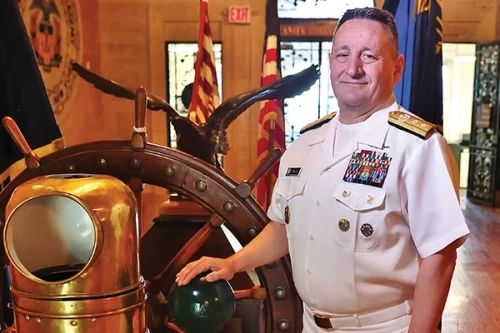
For Rear Admiral Anthony J. Ceraolo, coming to Kings Point feels, in many ways, like coming home.
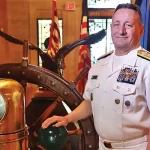
The Nesconset native officially became Superintendent of the United States Merchant Marine Academy in January after serving as Acting Superintendent since June 2025. But long before he was leading one of the Nation’s five federal service academies, Tony was a Long Island kid growing up surrounded by the water, transportation systems, and hardworking communities that shape so much of the region’s identity.

Now, after a 34-year Coast Guard career that took him from operational commands around the world to the White House National Security Council, Ceraolo finds himself back on Long Island helping shape the next generation of maritime leaders at one of the Nation’s most strategically important institutions.

“It is an incredible honor to serve as the 15th Superintendent of the United States Merchant Marine Academy at Kings Point,” Ceraolo said.

Talking with him, it quickly becomes clear that he sees the Academy as far more than a college campus.

“From my perspective, the Academy plays a vital role not only in shaping the next generation of mariners, but also the generations that will follow them,” he said.

A Career Shaped by Maritime Leadership

That responsibility feels especially significant today, as global instability, supply chain vulnerabilities, workforce shortages, and infrastructure modernization increasingly collide.

The United States Merchant Marine Academy occupies a uniquely important role within that conversation.

“The United States Merchant Marine Academy is unique among the Nation’s federal service academies,” Ceraolo explained. “Every graduate earns a Bachelor of Science degree, a United States Coast Guard license as either a Deck Officer or Marine Engineer, and a commission as an officer in one of the Armed Forces branches.”

“That combination creates leaders who are prepared to support both the Nation’s economic security and national defense interests in a rapidly evolving global environment.”

That intersection of commerce, transportation, logistics, infrastructure, and military readiness has defined much of Ceraolo’s own career.

Before arriving at Kings Point, he served on the National Security Council Staff at the White House as Director for Maritime Security and Director for Arctic Region Policy, where he helped develop Presidential Policy Directive-18 updating national maritime security policy and led development of the Nation’s first-ever National Strategy for the Arctic Region.

He later served as a Senior Counselor to the Secretary of Homeland Security, where he spearheaded and coauthored the Department of Homeland Security’s first Strategic Approach for Arctic Homeland Security.

Operationally, his experience includes commanding multiple Coast Guard cutters, serving as Commander of U.S. Coast Guard Patrol Forces Southwest Asia — the Coast Guard’s largest command outside the continental United States — and later serving as Sector Commander and Captain of the Port for San Francisco and Northern California.

Before retiring from the Coast Guard in 2023, he served as Executive Assistant to the Coast Guard’s Deputy Commandant for Operations, helping oversee strategy, operations policy, budget development, doctrine, and capabilities across a multi-billion-dollar enterprise.

Despite that résumé, Ceraolo still speaks with the groundedness of someone who understands the value of practical work and operational leadership.

The Maritime Industry’s Critical Role

“Our position at the crossroads of transportation, commerce, and national defense shapes every priority we set,” he said. “America’s economy depends on the reliable movement of goods, energy, and resources, while our national security depends on the ability to sustain and protect that movement during both peace and conflict.”

Those realities have become impossible to ignore in recent years. From supply chain disruptions and energy concerns to geopolitical tensions and infrastructure investment debates, the maritime sector has increasingly moved into public focus. Nearly 90 percent of global trade moves by sea, yet many Americans rarely think about the workforce responsible for sustaining that system.

“The United States relies on a highly skilled maritime workforce to sustain commerce and strategic mobility,” Ceraolo explained. “The Academy supports that mission by preparing licensed merchant marine officers who serve aboard commercial and military vessels and later bring their operational expertise to ports, logistics, transportation systems, shipbuilding, and related industries.”

That mission also increasingly overlaps with industries represented throughout Long Island’s construction and infrastructure sectors.

Building the Next Generation Workforce

“The Academy’s Sea Year program provides approximately a full year of apprenticeship training aboard U.S.-flagged vessels, giving students practical experience in vessel operations, propulsion systems, maintenance, logistics, and engineering in real-world environments,” Ceraolo said.

“Many of our graduates go on to leadership positions not only in the maritime sector, but also in construction, transportation, infrastructure, engineering, and logistics industries across the country, including here on Long Island.”

Sea Year remains one of the defining experiences of Kings Point. During their sophomore and junior years, midshipmen spend extended periods training aboard commercial and military vessels around the world.

“They gain firsthand exposure to global trade, shipboard operations, and leadership responsibilities at sea,” Ceraolo said. “In today’s increasingly contested and interconnected world, the Academy’s mission has never been more important.”

That real-world training shapes the qualities the Academy prioritizes in future leaders.

“We are focused on developing leaders who are technically capable, resilient, and committed to living up to our motto, Acta Non Verba — ‘Deeds, Not Words’ — while upholding our core values of respect, honor, and service,” he said.

“Technical proficiency is essential, but so is the ability to lead under pressure, make sound decisions, communicate effectively, and maintain the highest standards of accountability and character.”

Technology, Infrastructure, and the Future

Those leadership demands mirror challenges currently facing the construction and infrastructure industries themselves. Like heavy construction, maritime operations increasingly rely on advanced technology, complex systems management, and workforce adaptability.

“Technology integration, automation, cybersecurity, energy resiliency, and advanced systems management are becoming increasingly important across both the maritime and infrastructure sectors,” Ceraolo noted.

“Artificial intelligence, digital twins, advanced modeling tools, and integrated control systems are rapidly changing how industries design, build, operate, and maintain complex systems and facilities.”

At the same time, Kings Point itself is becoming one of Long Island’s most significant infrastructure projects.

Originally built during World War II, much of the Academy’s campus now requires extensive modernization to meet the demands of a 21st century maritime institution.

In April 2025, the Academy signed an interagency agreement with the U.S. Army Corps of Engineers to oversee an ambitious long-term Campus Modernization Program.

Working with a major international design firm, the Academy has developed what Ceraolo describes as “a 10-year, approximately $3 billion capital improvement plan focused on infrastructure modernization, deferred maintenance, resiliency, and future growth.”

Projects include new academic buildings, waterfront improvements, barracks renovations, maintenance facilities, student spaces, housing, utility upgrades, and a future Maritime Center of Excellence.

“The challenge is balancing the preservation of the Academy’s historic character while building the modern infrastructure necessary to support future generations of midshipmen,” Ceraolo said.

Opportunities for Long Island Industry

For Long Island contractors, engineers, marine construction firms, and infrastructure professionals, the opportunities are extensive.

“The Campus Modernization Program includes both new construction and major renovation projects involving academic, residential, administrative, support, and waterfront facilities, including pier and seawall improvements,” Ceraolo explained.

Marine construction, resiliency planning, utility modernization, institutional construction, and historic renovation expertise will all be essential as projects advance.

“The Academy’s project portfolio includes utility upgrades involving electrical, water, sewer, landscaping, and site infrastructure, along with marine construction projects such as pier and seawall improvements,” he said.

The Academy has already begun engaging directly with industry partners throughout Long Island.

“As USMMA advances its Campus Modernization Program, we are actively engaging with local industry partners throughout Long Island and the surrounding region,” Ceraolo said.

In partnership with the U.S. Army Corps of Engineers, the Academy recently hosted an Industry Day and plans additional outreach efforts moving forward.

“The best way to support the maritime sector is by maintaining strong relationships and listening to the professionals driving the industry every day,” he added.

Importantly, Ceraolo stressed that companies do not necessarily need traditional maritime backgrounds to contribute.

“Many companies are surprised to learn how transferable their expertise can be within the maritime environment,” he said. “As a federal institution with a large and evolving campus, USMMA relies on a broad range of partners across infrastructure, technology, logistics, professional services, utilities, facilities support, cybersecurity, sustainability, and operational modernization.”

Looking Ahead

For contractors interested in upcoming work, all procurement opportunities will be publicly posted through SAM.gov.

“Depending on the project, acquisitions may utilize multiple procurement methods, including Design-Bid-Build, Design-Build, Design-Build to Budget, and Integrated Design and Construction approaches,” Ceraolo explained.

Beyond the construction and modernization efforts, however, Ceraolo consistently returns to a more human focus: preparing young people for leadership and service.

“No matter where their careers take them, we want our graduates to understand that leadership is ultimately about service,” he said. “Service to those they lead, to the maritime industry, and to the Nation.”

That perspective feels particularly resonant coming from someone who spent decades serving across military, operational, and policy environments before ultimately returning home to Long Island.

After years helping shape maritime policy and national security strategy at the highest levels of government, Rear Admiral Tony Ceraolo now finds himself guiding the next generation from the shores of Kings Point, where leadership, infrastructure, transportation, and national service all meet at the water’s edge.

The Hidden Highway of Global Commerce

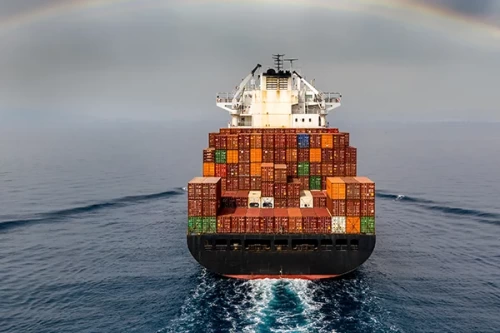
The Hidden Highway of Global CommerceUnless you are a geography enthusiast, the Strait of Hormuz may not be a place you could easily locate on a map. Yet this narrow waterway between the Persian Gulf and the Gulf of Oman plays an outsized role in our daily lives. A significant portion of the world’s oil supply passes through this maritime chokepoint, meaning geopolitical tensions half a world away can quickly show up here at home, often in the form of higher prices at the gas pump.

We learned a similar lesson during the COVID-19 pandemic, when supply-chain disruptions became part of our everyday vocabulary. Delayed cargo shipments, factory shutdowns, and transportation bottlenecks reminded us how interconnected the global economy truly is. When the movement of goods slows, the costs ripple through every sector, including construction.

Maritime commerce also faces risks beyond economics. Security threats remain real, as dramatized in the 2013 film Captain Phillips, based on the 2009 hijacking of the Maersk Alabama by Somali pirates. But beyond the headlines and Hollywood portrayals are the thousands of men and women who spend their careers moving the goods that sustain modern life. Most of us rarely think about them, yet our economy depends on their work every day.

The life of a mariner is far from glamorous. Long deployments, time away from family, international travel, and uncertain conditions can make for a demanding profession. In New York, that reality has long been recognized. Since 1873, Seafarers International House has served merchant mariners and immigrants arriving in New York Harbor, offering hospitality and practical support to those whose work keeps commerce moving.

New York is also deeply connected to maritime education and workforce development. SUNY Maritime College, founded in 1874 as the New York Nautical School, remains the nation’s oldest maritime college, training generations of maritime professionals from its campus at Fort Schuyler in the Bronx. Closer to home, Long Island hosts one of the nation’s most important federal service academies: the United States Merchant Marine Academy in Kings Point. Dedicated in 1943, the academy was described by President Franklin D. Roosevelt as serving the Merchant Marine “as West Point serves the Army and Annapolis the Navy.”

While the Long Island Contractors’ Association is rightly focused on the transportation and infrastructure needs of our region, global maritime systems have a direct local impact. Worldwide shipping conditions, energy markets, and international logistics shape the cost and availability of construction materials.

At the same time, Long Island has a unique stake in the future of maritime infrastructure itself. The US Merchant Marine Academy has faced significant deferred maintenance and modernization challenges, creating opportunities for the construction industry to help rebuild and strengthen this vital national institution. Supporting these improvements means more than upgrading facilities. It means investing in the next generation of professionals who will help sustain America’s economy and supply chains.

The roads, bridges, and infrastructure we build on Long Island may seem far removed from the shipping lanes of the Persian Gulf or the Atlantic Ocean. But in today’s interconnected world, they are all part of the same transportation network.

LICA 2026 Golf Outing Photos

LICA 2026 Golf Outing Brings Long Island’s Infrastructure Industry Together

The Long Island Contractors’ Association 2026 Golf Outing once again brought together leaders from across Long Island’s heavy construction and infrastructure industries for a day of networking, camaraderie, and support for the organization’s ongoing advocacy efforts on behalf of contractors, labor partners, and the region’s transportation and public works community.

Held at the picturesque Cold Spring Country Club and Huntington Country Club, the outing reflected the strength and unity of the industry, with members, public officials, and business partners gathering both on the course and at the evening reception to celebrate another successful year of collaboration and progress across Long Island’s infrastructure sector.

Q&A with Kyle Swaringen, P.E.

0

Kyle Swaringen, P.E.
Director, Bridges & Structures Engineering
Suffolk County Department of Public Works

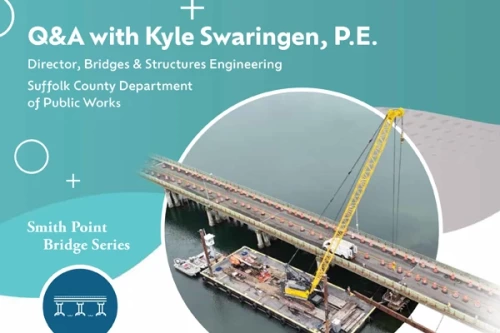
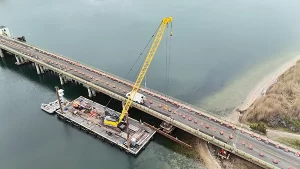
As beach season approaches, the urgency around the Smith Point Bridge is about safety. Suffolk County moved quickly to restore two-way traffic, ensuring the bridge can safely carry the surge of summer travel. This interim improvement was not a quick fix, but a carefully coordinated effort requiring strategy, engineering, and close collaboration across agencies and contractors to stabilize and maintain a vital link. At the same time, the County is advancing plans for a full bridge replacement, with construction expected to begin as early as this summer and projected to take approximately three years to complete.

Opening / The Moment

Two-way traffic has now been restored on the Smith Point Bridge. What did it take to get here?

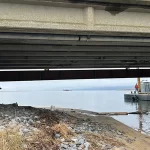
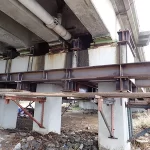
Two-way traffic was restored only after emergency crews stabilized the failing structure — most critically by installing a steel support-girder system to carry the load of the deteriorated concrete beams.
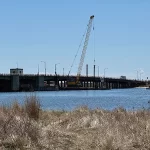
Was there a specific turning point or breakthrough that made reopening possible?

The moment that made reopening possible was when engineers finalized and installed the custom support-girder system designed to take over the load from the deteriorated concrete beams. Until that system was in place, the bridge simply couldn’t carry two-way traffic without risking further structural failure.

What Actually Got Done

What specific work or safety measures were completed to allow for the return to two-way traffic?

Restoring two-way traffic wasn’t just a matter of removing cones. It required a set of targeted structural safety measures to ensure the bridge could reliably carry full traffic loads again.

  • Installation of the temporary support-girder system. This was the core structural fix. The new steel girders were designed to take over the load from the deteriorated concrete beams, creating a safe, redundant load path.
  • Reinforcing and stabilizing weakened concrete areas of the existing beams. Crews reinforced deteriorated sections of the damaged concrete beams where deterioration was most advanced, preventing further cracking or deflection and allowing support from the temporary beams below.

What should the public understand about the complexity of this project that they may not have seen?

The deteriorated concrete beams meant the bridge couldn’t safely carry normal traffic. Designing and installing a custom support-girder system is not a simple repair; it is essentially creating a new structural backbone under an old structure.

That requires engineering calculations, fabrication, inspections, and careful installation — all under tight time pressure. Even though the bridge is slated for full replacement, the temporary system still must meet rigorous safety requirements.

The public may assume “temporary” means “quick and easy,” but in reality, temporary structural solutions often require just as much engineering as permanent ones.

Behind the Scenes

What did coordination look like between DPW, contractors, and other agencies?

Coordination on this project was far more involved than most people realize. Because the Smith Point Bridge is both structurally sensitive and the only access point to a major county destination, every decision required tight, real-time collaboration across multiple groups.

Here’s what that looked like behind the scenes:

  1. Daily communication between DPW, consultant engineers, and the contractor’s field teams.
  2. Coordination with traffic-control and public safety agencies. Because the bridge had to remain open in at least one direction at all times, the Suffolk County Department of Public Works coordinated with:
  3. Scheduling and staging aligned across all parties. Crews couldn’t simply shut down the bridge to install the support girders. Instead:
    • Work windows were planned around tides, weather, and traffic patterns.
    • Equipment staging had to be approved by DPW to avoid blocking emergency routes and water navigation channels.
    • Contractors coordinated material deliveries so they didn’t interfere with active traffic.
  4. Rapid decision-making under pressure. With summer approaching, all parties had to make decisions quickly — but safely.

Were there any innovative approaches or solutions used to accelerate progress?

One of the biggest accelerators in this project was the decision to allow the contractor to use stock steel sections instead of requiring custom-fabricated components. That choice made a huge difference in both timeline and logistics.

By approving standard, off-the-shelf steel sections, the contractor could source materials immediately rather than waiting for fabrication. Engineers adapted the temporary support-girder design to work with these available sections — a flexible, problem-solving approach that avoided major delays.

This decision allowed installation to begin much sooner, which directly accelerated the reopening of two-way traffic.

Impact

Now that two-way traffic is restored, what changes should commuters expect to feel immediately?

Commuters will feel the difference right away — and not just because delays shrink. Restoring two-way traffic changes how the whole bridge functions.

With alternating one-way traffic gone, drivers won’t be sitting at the light or waiting for opposing traffic to clear. The stop-and-go pattern that caused backups on both sides disappears.

How critical is this corridor, especially heading into peak summer season?

This corridor isn’t just important — it’s absolutely critical, and that becomes even more true as we head into the peak summer season. Smith Point County Park is the busiest park in Suffolk County, drawing huge volumes of visitors for beaches, camping, fishing, and day-use activities. And the Smith Point Bridge is the only roadway in and out.

That means:

  • Every visitor, every staff member, and every emergency vehicle depends on this single corridor.
  • Any restriction — even a minor slowdown — creates ripple effects for miles.
  • Summer traffic surges dramatically, so delays multiply quickly if the bridge isn’t fully operational.

Looking Ahead

Is the bridge fully complete, or are there additional phases still to come?

The work that was just completed — including the temporary support-girder system and associated stabilization — is the full extent of what will be done on the existing bridge. No additional repair phases are scheduled.

The goal of this phase was to safely restore two-way traffic and keep the bridge functional while the replacement project moves forward. Because the bridge is already slated for removal, it wouldn’t be cost-effective or practical to invest in additional long-term repairs.

What should the public be watching for next in terms of infrastructure priorities?

The next big thing the public should be watching for is the start of construction on the brand-new Smith Point Bridge, which is scheduled to begin in summer 2026. This is the county’s major infrastructure priority for the corridor.

Once construction begins, it will mark the transition from temporary stabilization to a full, modern, long-term solution. The new span will eliminate the aging drawbridge structure, improve safety, and provide more reliable access to Suffolk County’s busiest park.

Early work will include staging, site preparation, and foundation work — all happening while the current bridge remains open. The temporary repairs completed now are designed to safely carry traffic until the new bridge is ready. Only after the new span opens will the old bridge be removed.

What does successfully reopening the Smith Point Bridge say about what’s possible when infrastructure is prioritized?

  1. When infrastructure is prioritized, problems get solved quickly and safely. The bridge had serious structural issues, yet the county, engineers, and contractors moved with urgency. They didn’t wait for conditions to worsen — they acted, stabilized the structure, and restored full traffic flow.
  2. Collaboration accelerates progress. DPW, contractors, inspectors, and public safety agencies worked in sync. That level of coordination isn’t automatic — it happens when leadership makes the project a priority and everyone commits to the same goal.
  3. Smart, flexible engineering can overcome tight timelines. Allowing the use of readily available stock steel sections is a perfect example. Instead of waiting for custom fabrication, the team adapted the design to materials that could be sourced immediately. Prioritizing the project meant prioritizing solutions.

Welcome to the Summer edition of Road Warriors.

0

LICA Jaime Franchi head shots 6-7-22Summer on Long Island makes us think of beaches, tourism, and crowded parkways, yet behind all of it lies an enormous amount of infrastructure, planning, transportation, logistics, and workforce coordination that keeps the region moving. This issue of Road Warriors takes a closer look at many of the systems and the people behind them that quietly shape daily life across our Island.

Our cover story profiles Rear Admiral Anthony Ceraolo, the new Superintendent of the United States Merchant Marine Academy at Kings Point. A Nesconset native with an extraordinary career spanning Coast Guard command, homeland security, and maritime policy at the White House, Admiral Ceraolo returns home at a pivotal moment for the Academy and the Nation’s maritime future. As Kings Point embarks on an ambitious modernization effort expected to total nearly $3 billion over the next decade, the Academy stands at the intersection of infrastructure, workforce development, transportation, and national security.

Also in this issue, LICA Executive Director Marc Herbst reflects on the region’s changing infrastructure priorities and the workforce challenges facing the heavy construction industry. Congressman Nick LaLota discusses federal investment, tax relief, and efforts to return more resources to Long Island communities. We also take readers behind the scenes of the emergency stabilization and reopening of the Smith Point Bridge with Suffolk County DPW’s Kyle Swaringen, P.E., highlighting the engineering, coordination, and urgency required to restore this critical corridor ahead of summer travel season.

This issue also explores the future of offshore wind and marine construction through the perspective of the Dock builders Union, while Financial Perspectives contributor Rocco Carriero offers guidance on long-term retirement planning for business owners and industry professionals. In our Not-for-Profit Perspectives section, Devon Giordano, Executive Director of the Long Island Conservancy shares its mission to protect and restore Long Island’s natural environment through native planting and conservation initiatives.

Finally, we close this issue celebrating the connections that continue to strengthen our industry community, including highlights from another successful LICA Golf Tournament and recent gatherings that brought together contractors, labor leaders, engineers, elected officials, and industry partners from across the region.

As always, thank you for your continued support of LICA and Road Warriors. We hope you enjoy the issue. Stay safe out there!

Thank you,
Jaime Franchi
Editor-in-Chief
Road Warriors Magazine