

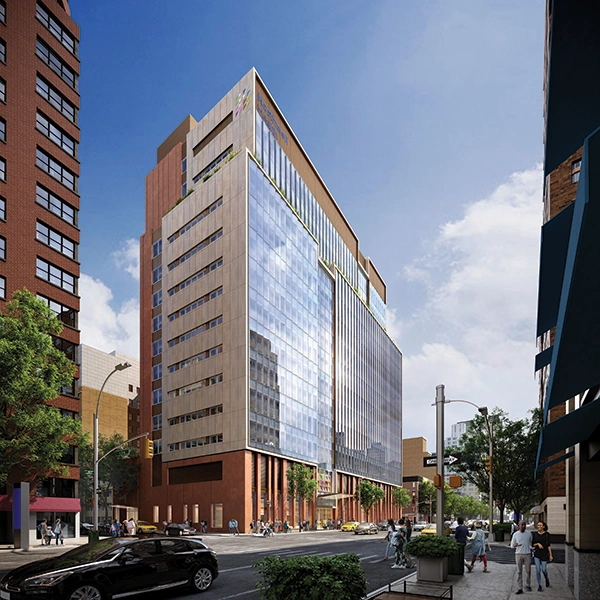
As the largest health care provider and private employer in New York State, Northwell Health continues to expand its footprint across Long Island with a forward-thinking approach to infrastructure and innovation. At the heart of this growth is the Facilities and Real Estate Services team—a dedicated group responsible for planning, building, and maintaining the spaces that support world-class patient care, led by Vincent Grippo, SVP, Deputy of Enterprise Services. In this exclusive Q&A, Long Island Road Warriors sits down with Grippo to discuss the challenges of managing a vast and evolving portfolio, the role of sustainability in their projects, and how strategic planning helps drive Northwell’s mission to raise the standard of health care in every community it serves.
What is Northwell overall vision for capital development, and how are your teams executing that vision?
Northwell’s capital vision centers on delivering high-quality care by strategically expanding and upgrading its facilities across regions. Across the system, capital planning emphasizes innovation, patient experience, and collaboration with clinical teams to design efficient, cost-effective spaces that enable the delivery of exceptional care now and into the future.
Can you speak to any major projects currently underway or recently completed that reflect Northwell’s strategic priorities?
Northwell is advancing a diverse portfolio of capital projects across its regions, reflecting a systemwide commitment to expanding access, modernizing infrastructure, and enhancing patient care.
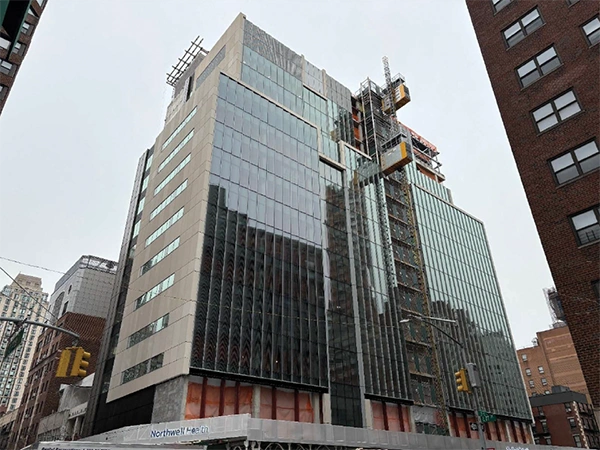
A first-of-its-kind Pediatric and Adolescent Behavioral Health Center was recently completed in Westchester, reinforcing Northwell’s focus on mental health services. In Manhattan, two major projects are underway: the 15-story, 25,000-square-foot Goldman Pavilion on 3rd Avenue will serve as a dedicated oncology facility, establishing a strong presence for the Northwell Cancer Institute in the borough. Additionally, a new outpatient mental health facility is in design for East 64th Street to meet critical behavioral health needs in the region.
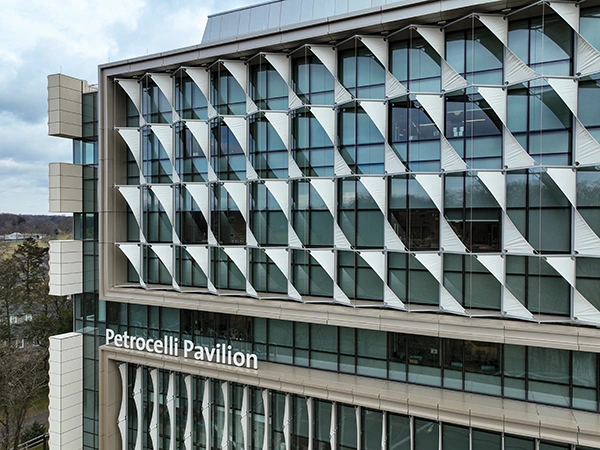
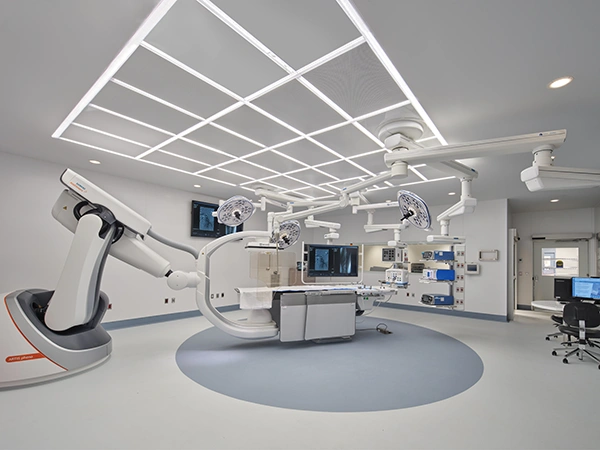
On Long Island, the North Shore campus recently saw the completion of the Petrocelli Surgical Pavilion—an expansion that added 18 operating rooms (including 3 hybrid ORs) and 132 new ICU beds, creating a state-of-the-art facility to better serve the surrounding communities. In the Eastern Region, South Shore University Hospital is undergoing a major operational expansion with a 190,000-square-foot pavilion housing 90 ICU-capable beds, 10 operating rooms, and 3 procedural rooms, alongside a 30,000-square-foot connector building that will integrate the new pavilion with the existing hospital to streamline care delivery.
In Staten Island, a 54,000-square-foot Labor and Delivery Center opened in May, featuring labor and delivery rooms, 3 C-section ORs, and 30 postpartum rooms, designed to support up to 4,000 births annually. A neonatal care unit is located directly adjacent, and expansion is already being considered due to high demand. The region is also experiencing growth in cardiology, with a new interventional cardiology lab near completion, as well as rising demand in neurology and stroke care, prompting the development of specialized interventional and advanced imaging spaces.
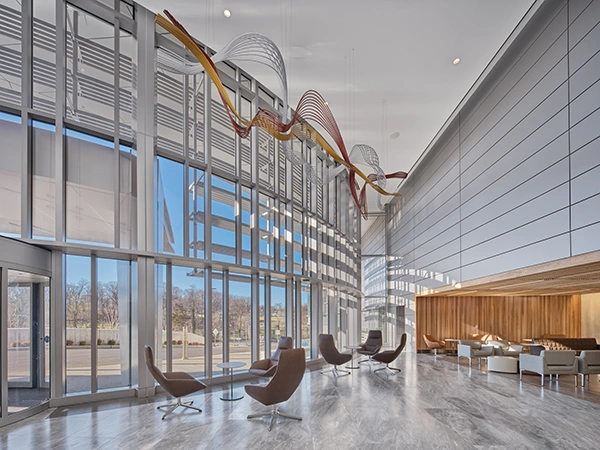
Systemwide, there is a strong focus on modernizing infrastructure to ensure long-term operational reliability and redundancy and improve patient environments. Across all regions, these projects are rooted in collaboration with clinical teams, a commitment to innovation, and a drive to enhance the patient and provider experience at every level of care.
How do you approach working with contractors, architects, and engineers in project delivery?
Strong partnerships are essential—designers, contractors, and owners must work in lockstep to ensure projects are delivered on time, on budget, and at the standard expected. Trust, communication and transparency are the key to mitigating risk on complex construction projects.
What do you look for in contractor partnerships, especially when working with Long Island-based firms?
Northwell seeks construction partners who bring more than just technical capability. They must align with the health system’s mission, values, and commitment to delivering high-quality, patient-centered care. Key selection criteria include demonstrated healthcare experience, local market knowledge, and a strong track record of successfully managing complex projects on tight schedules and budgets.
Local expertise is particularly important in regions like Staten Island and Long Island, where market dynamics, subcontractor availability, and regulatory relationships can vary significantly. Contractors must show strong connections with local trade partners, suppliers, and authorities having jurisdiction (AHJs), ensuring smoother project execution and compliance.
Construction managers (CMs) are viewed as professional service providers rather than commodities. Selection emphasizes personnel experience, project-specific qualifications, and collaborative mindset. Northwell values contractors who act as true partners, committed not just to delivering a project, but to advancing the broader mission of healthcare.
Ultimately, the goal is to build integrated, mission-driven teams that work collaboratively, avoid internal conflict, and consistently deliver safe, high-quality environments that support care excellence.
What advice would you offer contractors who want to work with large healthcare systems like Northwell Health?
Successfully working with Northwell requires more than construction expertise, it demands a deep understanding of the healthcare environment, a long-term mindset, and a commitment to patient safety, collaboration, and trust.
Contractors must demonstrate proven experience working in active healthcare settings, where patient safety, infection control, and minimizing disruption are paramount. This includes understanding the complexities of working in occupied spaces, complying with hospital-specific protocols, and conducting themselves with the mindset that they are guests in a patient-focused environment.
Relationship-building at all levels is critical. From project managers to executives, successful engagement depends on understanding Northwell’s people, processes, and mission. Contractors should approach the organization thoughtfully, avoiding aggressive tactics, recognizing the learning curve, and being ready to grow into larger opportunities over time. Trust is earned gradually, often starting with smaller projects, and expanding as performance and alignment with Northwell’s values are demonstrated.
Working with a large health system also requires a high level of planning and proactive communication. Teams must coordinate closely with multiple stakeholders, often months in advance, to ensure seamless project execution. Regional nuances, such as familiarity with NYC regulations (DOB, DOH), labor rules, and scheduling variances, are especially important in areas like Manhattan.
Ultimately, Northwell looks for contractors who are in it for the long haul, partners who are adaptable, aligned with the system’s mission, and committed to building strong, reliable teams that can deliver safe, high-quality projects in support of exceptional patient care.
What are some of the biggest challenges facing healthcare real estate and construction on Long Island today?
Northwell faces a range of challenges in delivering capital projects, driven by workforce limitations, escalating costs, regulatory hurdles, and market uncertainty.
A major concern across all regions is the shortage of qualified labor, both in design professionals and trade contractors. Rapid advancements in technology have outpaced the industry’s workforce capabilities, making it increasingly difficult to find teams with the specialized expertise needed for today’s complex healthcare systems.
Construction costs continue to rise, fueled by global tariffs, volatile material pricing, and a tight subcontractor market, especially in key MEP trades like electrical, fire alarm, and controls. These factors limit competition and drive up bids, particularly on large, technically complex projects.
Adding to these challenges is the unpredictability of financial markets and shifting global trade dynamics, which make it difficult to set stable budgets, define project scopes, and lock in GMPs. These conditions place added pressure on both Northwell and its contractor partners to remain flexible, proactive, and resilient in an increasingly complex and dynamic construction environment.
How has the post-COVID environment affected healthcare design, construction planning, and capital prioritization?
The post-COVID environment has significantly influenced how Northwell approaches healthcare design, construction, and capital planning. The pandemic highlighted the need for greater flexibility, resiliency, and preparedness across both patient care and administrative spaces.
In patient care settings, flexibility in design has become a top priority. Facilities now incorporate features like surge capacity, modular layouts, and improved infrastructure to handle future pandemics or unknown health crises. There is a heightened focus on enhanced MEP systems, increased emergency power, improved air exchange, oxygen delivery systems, and the inclusion of hands-free access and outdoor spaces to support both infection control and patient well-being.
From a capital planning perspective, COVID prompted a re-evaluation of project priorities and accelerated infrastructure investments to modernize facilities and harden them against future disruptions. Every project now undergoes closer scrutiny to ensure it aligns with these updated strategic goals.
Overall, the experience of the pandemic has reshaped Northwell’s long-term thinking, reinforcing the importance of flexibility, infrastructure investment, and a readiness mindset in all aspects of healthcare facility planning and delivery.